6 mins read
Scalable Infrastructure: The Cornerstone of Business Agility
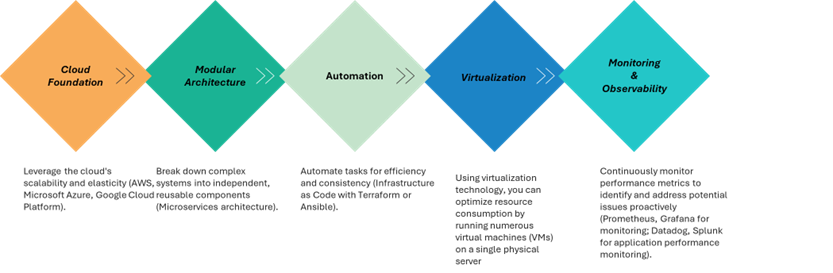
Businesses that want to succeed in the rapidly evolving IT landscape have to develop scalable infrastructure plans. These include creating architecture that is scalable, utilizing cloud solutions, automating tasks to increase productivity, putting proactive performance monitoring into place, and securing infrastructure to ensure success. Through the application of these strategies, organizations could adjust to unexpected spikes in demand and allocate resources optimally for maximum expansion and stability
Advantages of an Agile Infrastructure
Growth Foundation: By meeting increasing demands and avoiding constraints, scalable infrastructure facilitates business growth.
Adaptability: It gives companies the ability to change with the requirements of their customers, the market, and technology.
Building Blocks: Network architecture, hardware/software systems, options for storage, and data management are important areas to focus on.
Cloud Advantage: Cloud computing provides built-in redundancies for high availability and disaster recovery as well as flexible, on-demand resources.
Long-Term Success: Companies may attain long-term success and maintain their agility in a dynamic market by prioritizing a scalable foundation.
Quicker Time to Market: Use DevOps techniques and CI/CD pipelines to swiftly implement upgrades and new features in response to changing market demands.
Improved Adaptability: Using Terraform or Ansible to code infrastructure, you may quickly modify resources and configurations to adapt to shifting business objectives.
Enhanced Resilience: Leverage cloud-based disaster recovery solutions to recover swiftly from disturbances and preserve operational continuity.
Better Innovation: With a flexible basis, experiment and iterate more freely.
Essential Elements of Scalable Infrastructure :
Key Stages in Implementing a scalable infrastructure
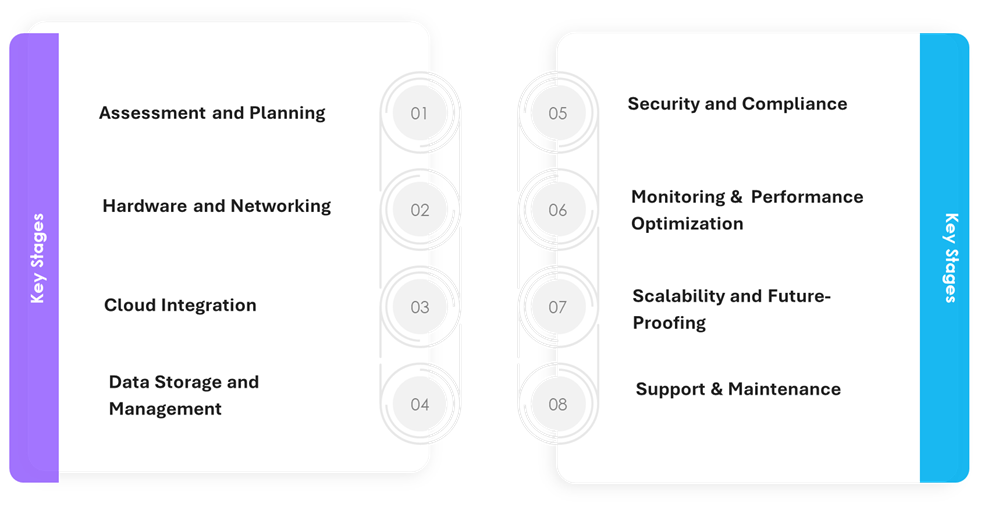
This section briefly describes several important steps in setting up a scalable infrastructure, The following are the typical phases involved:
In this case study, the setup of a scalable infrastructure for a small- to medium-sized IT firm / startup which will be referred as “Asdf” is presented.
Case Study: Asdf’s (A Midsized IT company /Start up) Blueprint for Success
For Asdf, creating a solid IT infrastructure from the ground up was essential as it set the stage for efficient operations, scalability, security, and innovation. We needed a well-thought-out infrastructure to achieve our business goals, plan for future expansion, and handle technology demands. We’ll list the essential elements and offer examples for each aspect of this blueprint to help you create an effective IT infrastructure.
IT Infrastructure Blueprint: A Step-by-Step Guide
Assessment and Planning:
It was crucial that we evaluate the organization’s present and future demands before moving forward with infrastructure design. This required knowledge of the company’s goals, projected growth, and technology needs. We were able to make well-informed judgments and guarantee that the IT infrastructure and business objectives were in line by carrying out a comprehensive review.
Example: We utilized tools like Microsoft Visio and Lucidchart for visualization and planning. Additionally, frameworks such as ITIL (Information Technology Infrastructure Library) guided our planning process, ensuring that we considered all aspects of our infrastructure needs.
Hardware and Networking:
Selecting the right hardware and networking components formed the backbone of our IT infrastructure. We considered factors such as performance, reliability, scalability, and budget constraints when choosing servers, switches, routers, and other networking equipment.
Example: We invested in top-of-the-line hardware including, Cisco Routers and networking equipment to ensure reliability and performance .Bare metal servers& Azure VM are also used for hosting our applications & environments . Software tools like Cisco Packet Tracer helped us simulate and optimize our network configurations.
Cloud Integration:
Integrating cloud services into our infrastructure offered scalability, flexibility, and cost-effectiveness. We leveraged cloud solutions from providers such as Amazon Web Services (AWS), Microsoft Azure, and Google Cloud Platform (GCP) to access on-demand resources and global accessibility.
Example: Azure Portal for cloud management. Additionally, frameworks like Terraform , We also used Bare metal servers from providers for development environment to optimize the cost facilitated the automation of our cloud infrastructure deployment.
Data Storage and Management:
Efficient data storage and management were crucial for Asdf. We selected storage solutions that met our performance, scalability, and data integrity requirements. Implementing data management practices such as backup and disaster recovery ensured business continuity.
Example: We implemented databases like MySQL and PostgreSQL for structured data storage, while leveraging cloud storage solutions such as Microsoft One drive Cloud Storage for scalable and durable storage. Tools like Actifio and CA arcserve Backup & restore helped us manage and protect our data effectively.
Security and Compliance:
Security was a top priority in designing our IT infrastructure. We implemented robust security measures including firewalls, intrusion detection systems, and encryption to protect against cyber threats. Compliance with industry regulations and standards was ensured.
Example: We deployed firewalls from Cisco to safeguard our network perimeter. Microsoft Defender for desktop antivirus ,tools like Nessus and Qualys were used for vulnerability scanning would be used, while encryption protocols and SSL certificates were implemented for data security. ISO 27001 certification for offshore development centre.
Monitoring and Performance Optimization:
Continuous monitoring of our infrastructure’s performance was essential for identifying issues proactively and optimizing resource utilization. We implemented monitoring tools that provided insights into system health, performance metrics, and potential bottlenecks.
Example: We utilized monitoring tools like Prometheus, and Grafana to track application performance and server health. NGINX and Redis were employed for web server optimization and caching, enhancing overall performance.
Scalability and Future-Proofing:
We designed our IT infrastructure with scalability in mind to accommodate future growth and changing demands. Technologies and architectural patterns were adopted to allow seamless scaling of resources and applications as our business evolved.
Example: We embraced container orchestration with Kubernetes and Docker Swarm, enabling us to scale individual components of our applications independently. Additionally, microservices frameworks such as Spring Boot and Flask facilitated modular and scalable application development.
Desktop Support & Infrastructure Ticketing Software Solutions
For managing desktop support requests and infrastructure issues within the organization, a robust ticketing software plays a vital role. These tools streamline the process of logging, tracking, and resolving problems, improving efficiency and user satisfaction.
Example: Tool like Jira Service Desk, SolarWinds Service Desk
Conclusion: A Recipe for Success
By strategically combining a hybrid cloud infrastructure with robust security practices and optimized desktop support, Asdf has created a solid foundation for sustainable growth. This approach empowers them to adapt to changing market dynamics, innovate rapidly, and prioritize the security of their data and user information. As Asdf continues to scale, their commitment to a secure and adaptable infrastructure will undoubtedly fuel their future success